Who decides what the standards actually need?

Jaud IT at infraBIM Open 2026

08. June 2026

Cover Image Credit: InfraBIM Open

Štefan Jaud presents at infraBIM Open 2026 in Paris this June, co-authoring a paper with Dr. Rico Steyer of AKG Software Consulting GmbH. The presentation title is Open BIM Data Formats for Infrastructure: the Point-of-View of a German Software Developer Company. The central question: are open BIM standards for infrastructure actually built with software developers in mind?

The conference

infraBIM Open 2026 (IBO26) runs June 8–10, 2026, at the ESTP Paris Campus de Cachan, near Paris. It is the main international gathering for open BIM in infrastructure, co-located this year with JNCE26, the French-language track. Sessions cover data exchange, georeferencing, and IFC implementation across rail, road, and utilities.

What the paper argues

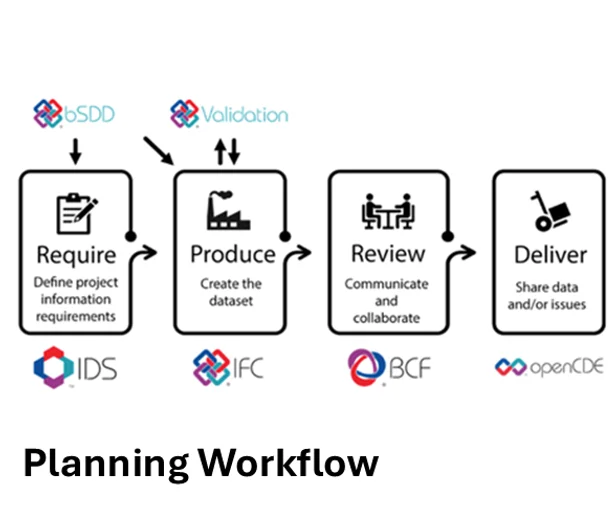
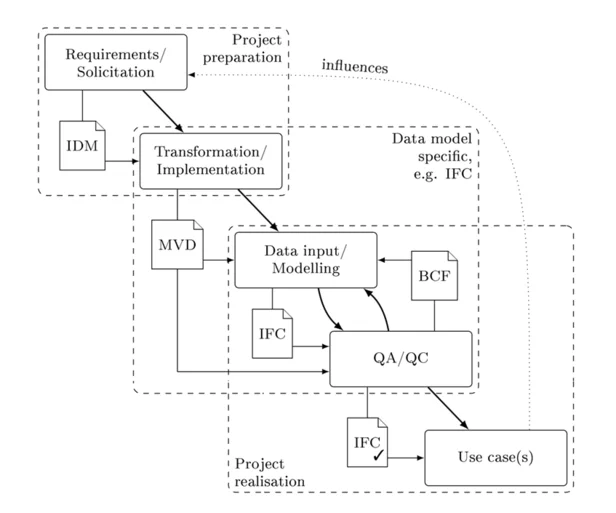
buildingSMART International (bSI), national organizations, and industry players have built up a substantial body of standards and tools for open BIM in infrastructure: IFC, IDS, BCF, IDM, MVD, and more. bSI uses a process diagram to show how these pieces fit together. It gets cited a lot. It is also, in Jaud IT's reading, built almost entirely around the end user: the engineer, the project manager, the client.

Not a bad framing. It reflects what the standards effort is trying to do. But it doesn't say much about what implementing those standards in software actually looks like. The schema dependencies, edge cases, and backward compatibility questions a developer faces when adding IFC export to a product are different from the ones a user faces when running a model check. The diagram mostly covers one side of that.

The paper doesn't argue against user-centered development. It argues that software implementers are a distinct stakeholder group, and that the process diagram should reflect that. Jaud IT and AKG extend the diagram to include that dimension, drawing on their combined experience implementing IFC, IDS, BCF, IDM, and MVD in practice.

What Jaud IT brings to this

Štefan Jaud's background spans both sides of the standards-to-software gap. He holds an M.Sc. from the Technical University of Munich and is currently pursuing his PhD on georeferencing and BIM at TUM's Chair for Computational Modeling and Simulation. He previously served as a team member and validation lead on the IFC Bridge, IFC Road, IFC Tunnel, IFC Rail, and IFC Infra Extensions Deployment projects — the international effort that expanded IFC to cover infrastructure assets. At Jaud IT, that work translates into consulting that sits at the schema level: not describing the standards from the outside, but working inside them.

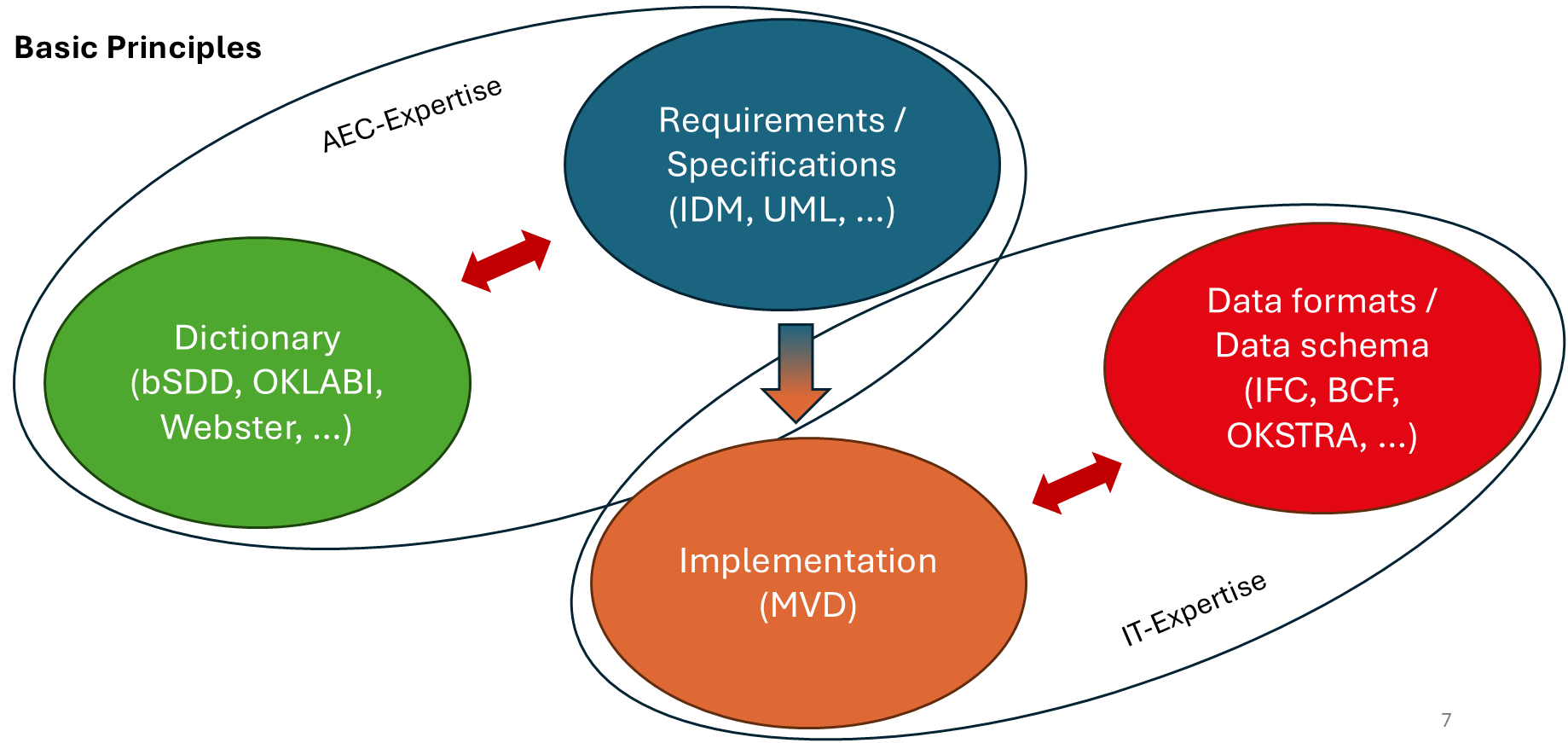
One more thread in the paper: OKSTRA. OKSTRA (Objektkatalog für das Straßen- und Verkehrswesen, roughly: object catalog for road and traffic infrastructure) is a German non-proprietary open data format developed outside the bSI track, maintained nationally, and used widely on German infrastructure projects. The question it raises is a blunt one: when a country builds its own open format rather than relying on the international process, what does that say about the international process?

Why infraBIM Open

The standards community is reasonably good at building consensus among users, clients, and public bodies. Software companies that actually implement the resulting specifications are harder to organize as a voice in that process. They are also the ones whose experience most directly determines whether a standard works in the field or stays a diagram on a slide.

infraBIM Open puts researchers, national standards bodies, software vendors, and infrastructure clients in the same room. For a paper arguing that the bSI process diagram is missing a stakeholder group, that's exactly the room to be in.